



My DCI Encounter
DAN AP Member, Narelle, recalls her DCI experience one year on.
17 February 2007…… An Adventure Begins!
Arriving at Santo I was quite excited at the prospect of finally being able to dive the President Coolidge. I had read so much about it and all reports recounted in glowing terms the amazing dives we were about to undertake. I was well rested and ready to dive having spent the preceding three weeks lazing around in Coffs Harbour, Evans Head and Coolangatta.
I am a certified open-water diver. I learnt to dive whilst working in the Solomon Islands where I spent every weekend diving WWII wrecks. With about 100 dives under my belt, and some quite deep, I felt ready to dive the Coolidge.
My last dive had been on Verde Island in the Philippines on 6 July 2006 to a depth of 25 metres.
My preparation before I went on holiday was a bit hectic. I was under pressure at work and when I got around to checking my kit it was all a bit of a rush. Nevertheless, I did check that my DAN insurance was still current – I have been a member since I became an open water diver, I’d had my gear serviced for my trip to the Philippines, checked my computer was working ok, put my dive logs in my bag and ensured that I took travel insurance which also covered diving accidents.
At 43, I decided that I needed to be as fit as possible, so I had spent the last 6 months improving my fitness level with regular cardio and weight sessions, plus I increased my water consumption, improved my diet and cut down on alcohol consumption. I felt I had done enough to be ready for my nine dives on the Coolidge.
The Diving
For our first dive on the Coolidge we were given a full briefing of what to expect, where we would go, what we would see, and how long we would be down for, which I found very reassuring.
Our first dive was fairly average, we dived down to the bow and swam across the top of the wreck, there was loads of ammunition scattered around. This was a large group dive to enable the guides to determine each divers’ capacity and experience.
My dive log records:- “Depth 32.6 metres, dive time 47 minutes with a 5 minute safety stop, no decompression and using 108 bar. General discomfort with a large number of divers in the water together at the same time, had trouble with my buoyancy” – at the time I just thought it was because I hadn’t been diving for a while, however, more on this later.
Over the course of the next few days we progressed in both depth and difficulty. I remember that I had a few issues the first time we went to dive inside the wreck. I felt some trepidation at the confined space, and the closeness of the other divers. However, over the course of the next few dives I would slowly become much more comfortable with this type of diving. My favourite dives were outside the ship taking in its enormous length and girth – I remember looking at the enormous anchor laying the bottom thinking that it couldn’t be real.
An excerpt from my third dive log: “Depth 51.4 metres, dive time 56 minutes, deco stops 9 metres and 5 metres, sea temp 27oC, viz average, used 152 bar – this was a great dive – absolute favourite so far, saw ship’s anchor, loads of guns, dropped right down and saw toilets still intact - really nice peaceful dive around deep parts of the ship – liked this a lot” – followed by three smiley faces which is my code for a totally excellent dive.
Most of the dives involved simply walking out about 100 metres then putting on your fins and mask and dropping down and swimming across the ship to the preferred dive site. Sometimes the current was strong and we would use quite a bit of air getting to the site. As we progressed through to the more complex dives we would swim on our backs to buoys strategically placed further out before we descended.
Our seventh dive was to the Swimming pool. This was right at the back of the ship so this was one of the dives where we did a surface swim for about 100 metres before descending.
The day before we had done two quite deep dives, one to the engine room at 48.8 metres for 70 minutes, which was totally fantastic and then in the afternoon we did Million Dollar Point – a veritable dumping ground of tanks, cars, jeeps, and artillery at 31.4 metres for 48 minutes.
After the Million Dollar Point dive I felt really average as soon as I got out of the water, very tired and my left ear was throbbing. After this dive I had to go and lie down for 2 hours to overcome the throbbing and general sense of feeling unwell. When I got to dinner some of my other dive buddies reported soreness in their ears. I had an early night to bed and concentrated on drinking lots of water.
The swimming pool at 56.9 metres and 66 minutes was a pretty heavy dive. I remember getting a bit spacey at the bottom and feeling a bit weird. My dive log records: “Used 169 bar which is a lot for me, very apprehensive approaching this dive, ear sore from yesterday. But glad I went – really deep and dark, but worthwhile. Pool was very small, but beautiful tile work still intact. V. good dive. Had problems with BCD again – it kept inflating and I kept having to dump air all the way down and up. On the way back up at decompression stop number two at 6 metres nearly shot up to the surface until Dive leader disconnected my inflator hose”.
The afternoon dive was to the Medical Supplies room. I wasn’t going to go because of how ordinary I felt after the swimming pool but I went anyway. Depth 32.4 metres and it got 3 smiley faces – it was a fascinating dive, loads of vials, syringes and medicines. I felt fantastic after this dive.
I had noticed in the preceding dives involving deco stops that my computer had cleared me of deco time a long time before my dive buddies computers. Whilst I thought this was slightly odd I dismissed investigating further, but erring on the side of caution, I elected to stay with my dive buddies until their computers cleared.
The next day I had a rest from diving and went on a bus tour. Overall it was a very draining day and in retrospect it may have been easier to do a dive!
For my ninth and final dive we were attempting to dive the stern. After a very detailed briefing we went in. It was high tide, combined with a strong onshore breeze and current. I inflated my BCD to attempt the surface swim – the valve got stuck and the BCD continued to fill with air. In frustration I disconnected the hose and continued with my surface swim. It took us about 10 minutes swimming against the current to get to a midway buoy. We were all a little short of breath and thought it may be a bit easier to descend and so we did. We were all very focussed. Once we hit 20 metres the strong current abated and we commenced the second half of the descent.
Dive log records: “Depth 63.4 metres, dive time 60 minutes, deco stops at 10 metres, 6 metres, 5 metres and 3 metres, used 189 bar. Absolutely unbelievable dive, made it to stern without dying! Saw school of 12 barracuda, black giant trevally on way down. Swam past starboard prop shaft and realised how bloody big this boat really is. The first real view of the size and scale of the boat became apparent on this dive. Went around stern and saw “Coolidge” on back, had photo taken then swam around and saw the HUGE rudders which were set horizontally on the ship rather than vertically and then somewhat reluctantly left stern for cargo holds 6 and 7. Dive leader advised that dive buddy had limited air and with 50 metres of water between us and the surface we seemed to swim in record time up to 20 metres, my dive computer kept telling me to slow down that I was ascending too fast – so I came up a lot slower than my dive buddies. BRILLIANT – 4 smiley faces” – a rating I have never allocated before.
After the dive I felt fantastic, totally elated. We spent the afternoon lounging around the pool at the hotel. Later that day we attended a function at another hotel that was up a small hill with commanding views over Santo Harbour. I had two drinks (a lemon solo and a bourbon and coke) and by 6pm I was feeling tired, which I put down to a very big dive, so I left. I caught a taxi back to our hotel and on the way down the hill I felt a pain in my left ankle and pins and needles radiating up and down my lower left leg. I had dinner and a couple of wines to celebrate a great day’s diving and a terrific holiday then went to bed. The pins and needles went away.
The next morning (Saturday) I decided to go and buy some trinkets in town. As soon as I got up and started walking around the pins and needles returned. Again, I thought nothing of it. After returning at lunchtime the symptoms had not dissipated but had not got much worse, but I decided to advise our Tour Leaders. I have to admit by this time I was pretty suspicious.


Above: Narelle and her dive guide, Albert 1, immediately after the 65m dive.
Above Right: Narelle and her dive buddies two hours after conquering the stern. The first symptoms appeared seven hours after this picture was taken.
My Dive Computer Told Another Story
My Tour Leader asked to see my computer. She advised that my computer was set to 28% oxygen – which is a nitrox setting. We had been diving on air and the setting should have been 21%. Despite having read my computer manual on a number of occasions and being seemingly comfortable with its use, I had failed to realise this – a fairly horrendous mistake. This then explained the early clearing of my decompression time by comparison with my dive buddies.
Our Tour Leaders advised me to get on some oxygen, the prevailing view is that if the pins and needles went away it was an indicator of Decompression Illness. At this point it was all getting a bit serious.
I Called DAN
After two 50 bar tanks of 100% oxygen, my symptoms disappeared, but soon reappeared when I stopped breathing oxygen. I went back to the hotel and rang the DAN Asia-Pacific number, which I always carry around with me on dive trips.
DAN was fantastic. I was dialling in from a remote location, yet they dealt with my call immediately and quickly. I explained my symptoms and gave them my contact details. They advised they wanted to treat me for DCI. It hit me like a tonne of bricks. I thought this couldn’t be happening.
Over the course of the next 30 minutes I had two further doctors contact me asking me to explain my symptoms and they both confirmed the diagnosis. I received a call from John Lippmann, who advised me that my DAN insurance covered my evacuation but it didn’t cover any medical expenses or accommodation because I had only secured insurance to 50 metres and of course I had dived to 63.4metres. It was at this time that I was truly thankful to have taken out extra travel insurance because it covered the expenses that DAN did not. John told me to get back down to the dive shop and get on oxygen for at least the next 4 hours, which I did without argument.
It was a very long afternoon. Every time a tank was emptied (I was breathing from a small tank and regulator) and I stopped inhaling the oxygen the symptoms would return more pronounced and more intense.
All afternoon DAN kept contacting me and talking to me about what was going on. They were exceptionally helpful, professional, sympathetic, but above all calm, which helped to me remain calm, lucid, and able to listen to their instructions and do what I was told.
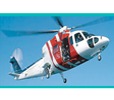
At about 4pm on Saturday afternoon, the pins and needles started going up my left arm and the general level of discomfort increased, it was also at this point I started tripping over my words. I would start a normal sentence and finish it with word salad. I really started to worry at this point. I advised DAN and within minutes they contacted me again to say they would be airlifting me out that night to the Hyperbaric Chamber in Port Vila and to stay on the oxygen. I had about two hours to get ready. At US$3000 for the average treatment in the Chamber, I again thanked my lucky stars that I had taken out extra insurance.
The Treatment Begins
Upon landing at Port Vila I was met by Wendy from Pro-Med who had arranged the evacuation. She too was reassuring and kind, a big ask at 10pm on a Saturday night. Wendy and Jason accompanied me to the hyperbaric chamber where I met Jenny. Jenny was the person who would sit with me in the Chamber. She sat calmly explaining the process. I looked at the chamber, which appeared small and claustrophobic, whilst she cheerily informed me that we would be in it together for 6 hours.
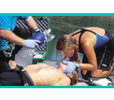
As we approached the chamber I got pretty edgy, the thought of being locked in that thing for 6 hours all got a bit much, but when they placed the huge face mask over my nose and mouth and asked me to breathe I started to loose it. It was really hard to breathe through. It was so difficult that you couldn’t concentrate on anything else but your breathing.
Jenny’s capacity to calm me down was exceptional. She explained that I had to keep it on while we descended to 18 metres so as to help flush out the remaining nitrogen bubbles and it was a most important part of the treatment. Ever so slowly I got it together.
The treatment started with four 30 minute stints with the oxygen with 5 minute breaks in between, then after that it was 1 hour with a 15 minute break, then 1.5 hours straight, then another hour. It was an excruciatingly long time and I was busting to go the toilet.
I should also mention here the expertise with which the chamber was run. Two gentlemen from a local dive company also spent their Saturday evening and Sunday morning operating the chamber – which is an inordinately complex process. They use the US diving tables and follow them to the absolute letter – again these people were professional, friendly and kind – the whole thing was incredibly humbling.
At 5am in the morning I had completed the first treatment, the symptoms had subsided but had not disappeared altogether. I saw a doctor later that day and while it was decided that I would not need another treatment I also could not fly for a week. I was given the all clear on the 1st March and my doctor congratulated me on what he viewed as a most novel way to spend my birthday – in a Hyperbaric Chamber!
I returned to Sydney on the 2 March. As I write this I have some mild nerve damage in my left leg and I get the odd ache and pins and needles. I have been advised that these will disappear over time. I am very, very lucky.
What Can We Learn From My Experience?
- Understand all aspects of your dive computer and get it checked by your dive instructor/professional before you dive.
-
Take the time to test and check all your equipment thoroughly before heading off.
-
Dive to your computer (when you know it is correctly set). (Ed’s Note: I suggest that you dive considerably more conservatively than your computer.
Many divers we manage for DCI have been diving “to” their computers).
-
When attempting deep dives do your dive profile and decompression stops on the tables you had to learn in your open-water course as a back up.
-
Don’t dive with defective equipment.
-
In addition to your DAN Membership, take out DAN insurance to cover the level of diving you plan to undertake.
-
DAN even gives non-members advice about DCI from anywhere in the world, so if you are experiencing problems, ring them.
-
Report your symptoms as soon as possible and get advice/help.
-
Do what DAN tell you to do.
-
When travelling overseas take out travel insurance in addition to DAN membership and insurance. This covers expenses such as in-hospital medical costs for a non-diving accident which DAN does not cover.
Acknowledgements
Thank you to my tour leaders, my dive buddies and dive guide, Alfred No1. Most importantly I would also like to thank John Lippmann and the team of wonderful doctors and support personnel at DAN and Jason, Wendy and Jenny and the guys who operated the Chamber for me from Pro-Medical in Port Vila.
Postscript
As soon as I get my dive clearance I will be out there again, although infinitely wiser and certainly less cavalier.
A Year On ….
We are happy to advise that Narelle has been true to her word and has re-commenced diving having fully recovered from her DCI experience and all the associated symptoms. Narelle went diving in the Solomon Islands in August 2007 and in March this year she will be returning to dive in Vanuatu.
Final Word from DAN:
It is quite likely that Narelle began to have symptoms of DCI after the previous days’ diving, after which she complained of feeling unwell and very tired. This would be compounded by the final dive. Although symptoms were present at night, no action was taken until the following morning and delays such as this can affect the subsequent treatment and outcome. In addition, although the dive operator provided some oxygen prior to the diver calling DAN, this was given using a demand valve with mouthpiece and, importantly, without the nose being blocked. This will substantially reduce the concentration of oxygen delivered and can again possibly affect the outcome. It is essential that a diver, thought to be suffering from decompression illness, is given as close to 100% oxygen as possible, as soon as possible, and until they are assessed by a doctor with training in dive medicine. In remote areas, where a chamber is not readily available, we often advise the diver to breathe 100% oxygen for 4 to 5 hours straight and as soon as possible to try to reduce the nitrogen load. These may well be followed by additional oxygen breathing and treatment if necessary.